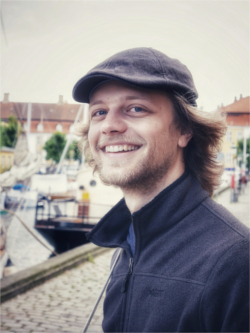
Sebastian Weichwald.
What do causal models claim, and how would we know?
I work on causal models, their abstraction and falsifiability, and the identification and verification of their claims. We ask what these models represent, which conclusions they license, how those conclusions can be checked, and whether apparent progress survives closer inspection. Much of this starts by stepping back to ask what we are trying to do(ask = “Why?”), not least because automated causal reasoning requires sound foundations.
Our work spans causal abstraction and representation, verification of interventional formulas, and the interpretation and falsifiability of causal models. We probe the foundations and practice of causal modelling through time and acyclicity, benchmark artefacts, and causally meaningful graph comparisons, often turning conceptual questions into algorithms and research software (𝚐𝚊𝚍𝚓𝚒𝚍, CIfly, and FLOP). Across these directions, we ask what models implement, what abstraction preserves, and which claims can be checked.
At the University of Copenhagen, I am part of the Copenhagen Causality Lab (CoCaLa), where I am lucky to work with a relentlessly curious group. I am a faculty member in the Department of Mathematical Sciences, co-lead for causality at the Pioneer Centre for AI (P1), and serve on the fellowship evaluation committee of the Danish Data Science Academy (DDSA). Previously, I was a postdoc in Copenhagen and a PhD student at the Max Planck Institute for Intelligent Systems and ETH Zurich.
News.
- 2026-Jul.
- New preprint with Francesco and Leonard on verifying formulas for interventional distributions. Our first route combines falsification, front-door gateways, and a delightful detour through exact arithmetic and polynomial identity testing. As LLMs and AI agents renew interest in automated reasoning, checking causal reasoning may become at least as important as generating it 🚪
- 2026-Apr.
- New preprint on causal effect estimation via a single proxy variable using SPICE 🌶️; at the same time, Marcel presented our flopsearch work at ICLR, and Frederik’s work on causal foundations of collective agency made it to CLeaR. It is fun to collaborate with such sharp, generous minds! 🙏
- 2026-Mar.
- “The Case for Time in Causal DAGs” accepted at Philosophy of Science – my first paper in a philosophy journal 🏛️
- 2026-Jan.
- Starting 2026 in a fair way: “Unfair Utilities and First Steps Towards Improving Them” accepted at the Journal of Causal Inference. Happy New Year 🎉
↳ Olds.
Group at CoCaLa.
We are part of the Copenhagen Causality Lab, where I feel lucky to work with people who are open-minded, technically sharp, and generous with ideas. We often step back to the blackboard to question defaults, sharpen concepts, and see whether a problem needs a new formulation rather than another incremental variation. If this sounds like an environment you would like to contribute to, check out how to research with us.
- Emanuele Marconato (incoming 2026, MSCA Postdoc)
- Francesco Freni (since 2025, PhD student – co-supervisor: L Henckel)
- Emma Zambolin (since 2025, PhD student – main supervisor: LKH Clemmensen)
- Harald Kugler (since 2025, PhD student – co-supervisor: AR Lundborg)
- Hubert Drazkowski (since 2025, PhD student – main supervisor: Y Seldin)
- Mikolaj T Mazurczyk (since 2024, PhD student – main supervisor: C Igel; co-supervisor: Y Seldin)
- Moises C Flores (since 2024, PhD student – main supervisor: L Henckel)
- Anders G Madsen (since 2024, PhD student – main supervisor: LK Hansen)
- Silvan Vollmer (since 2024, PhD student – co-supervisor: N Pfister)
- Luigi Gresele (since 2024, Postdoc)
- Frederik H Jørgensen (since 2022, PhD student – co-supervisor: J Peters)
Alumni: Simon Bing (2025, PhD exchange), Emanuele Marconato (2024, PhD exchange), Alexander G Reisach (2024, PhD exchange; 2020/21, MSc exchange), Theo Würtzen (2023/24, RA)
Research with us.
For official contact details, see my University of Copenhagen profile.
Before emailing, please read the relevant section below and use the subject prefix indicated there. This is a small but useful intervention: it makes it more likely that your message surfaces in the right context.
We are always happy to hear from curious people who want to think deeply about causal modelling, its foundations and practical limits, and its connections to reliable machine learning. We receive many inquiries and may not be able to respond to all messages. Please do not read silence as a lack of interest. It usually means we are at the blackboard or immersed in research discussions with the group 📚. If your message is still relevant after a few weeks, do feel free to resend it. We won’t mind at all 📬.
Postdoc and PhD positions.
Postdoc positions are announced annually (applications due November 15) and PhD positions twice a year (applications due April 1 or November 1) through official department calls.
Applications must be submitted through the official calls. To keep the process fair and manageable, we cannot pre‑assess applications, provide feedback, or consider application materials sent by email outside these calls.
In your application, describe your own ideas and explain why they fit well with our group and, if relevant, with the specific project mentioned in the call. Even when a project is listed, you are always welcome to pitch your own research agenda. If you are unsure whether your background or interests are a perfect match, we still encourage you to apply. We value curiosity and originality, and details can be discussed during the process.
If you plan to apply for your own funding (for example, DDSA, DARA, MSCA), email me using the subject prefix “[initiative]” and include a concise sketch of your project, the relevant funding scheme, and why you believe our group offers the right environment for it.
Additional resources: PhD programme overview, salary conditions (PhDs usually start at step 4 after a 3+2 BSc+MSc education), pointers for prospective postdocs or PhD students on Jun Yang’s website.
Research visits and exchanges.
We have had great experiences hosting research visitors and PhD exchange students. If you are interested in visiting, please email me using the subject prefix “[visit]” and include a note about your background, what you would like to research with us, and what draws you to Copenhagen or the Copenhagen Causality Lab. DDSA visit grants may be a funding option for short visits.
Collaborations.
We welcome collaborations where our interests and expertise can add something useful, whether that means a joint research project, organising a workshop, or inviting us for a talk. If you have an idea that aligns with our work, feel free to reach out using the subject prefix “[collaboration]”.
MSc thesis and student projects.
If you are a student at the University of Copenhagen and would like to do a thesis or student project with me, please stop by my office or email me from your university address using the subject prefix “[UCPH]”. Include one concept, topic, or paper from a relevant course that sparked your curiosity and a question it raised. Also tell me which aspects of the work you enjoy most (for example theory, proofs, literature research, coding, data analysis, or writing) and what your ambitions are for the project.